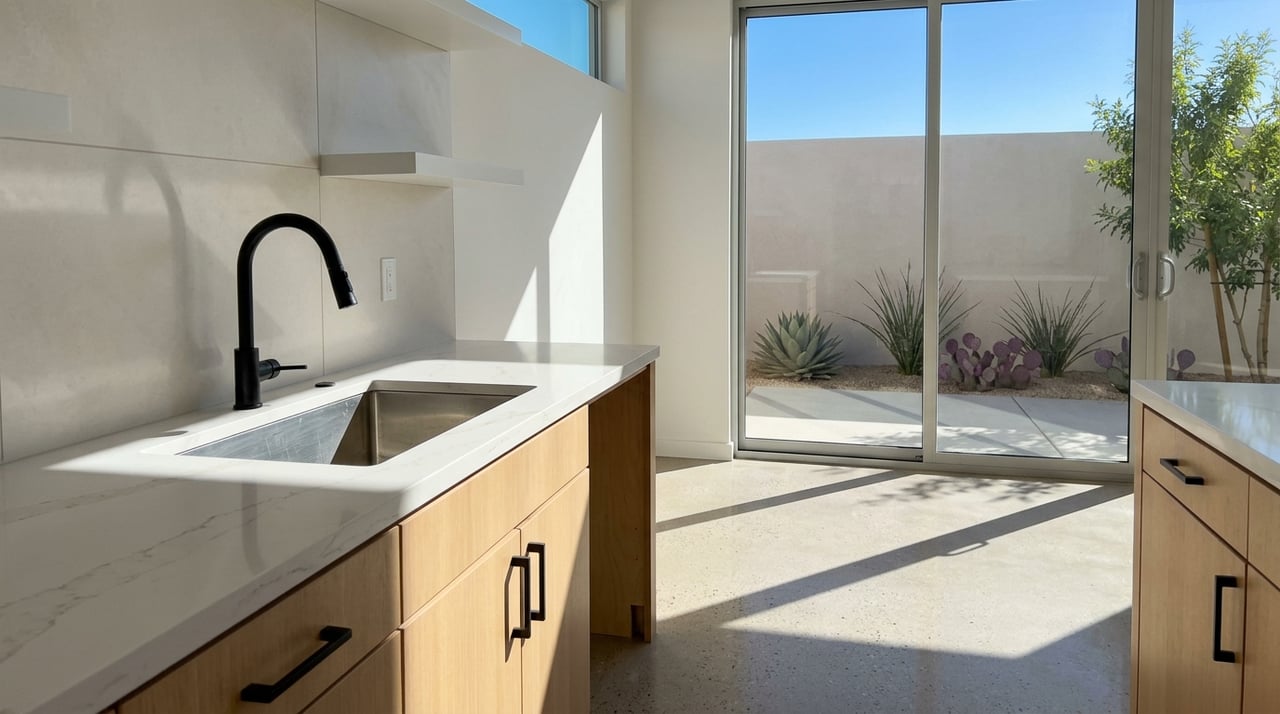
New Construction Homebuying In North Peoria AZ
July 23, 2026
July 23, 2026
Looking at a brand-new home in North Peoria? It is easy to focus on the model home, the finishes, and the builder’s incentives, but the real decision is often much bigger than the floor plan. If you want to buy with confidence, you need to understand how North Peoria is growing, what your contract really says, and where extra costs can show up. Let’s dive in.
North Peoria is shaped by long-range city planning, not just by individual neighborhoods. The City of Peoria’s planning and zoning framework includes North Peoria-specific areas such as Lake Pleasant / North Peoria, Lake Pleasant Heights, the Loop 303 corridor, and the North Peoria Redevelopment Plan.
That matters because when you buy new construction here, you are also buying into a future development pattern. City planning documents for the Loop 303 corridor emphasize housing choice, land-use compatibility, environmental protection, and better connectivity, while the Lake Pleasant Heights plan calls for a mix of residential uses along with commercial areas, parks, open space, and other community features.
In North Peoria, a great lot today may look different a few years from now as nearby land develops in phases. Vacant land near your future home may later become more housing, roads, commercial space, or other planned uses.
That is why lot choice should go beyond a mountain view or cul-de-sac location. You should also think about adjacent land uses, possible road extensions, setback lines, and how the surrounding area is expected to grow over time.
A resale purchase usually follows a more predictable path. With new construction, the process can involve a builder deposit, a longer timeline, design selections, permit milestones, inspections, and a closing date that may shift as construction progresses.
Freddie Mac notes that a new-construction contract should include a completion date and explain what happens if that date is missed. In Peoria, the city’s development portal also reflects the reality that a home moves through permitting and inspection checkpoints, not just one simple countdown to closing.
One of the biggest differences with a new build is timing. Arizona’s Buyer Advisory recommends getting your loan application started before making an offer when possible so your lender has time to review documents before closing.
That early preparation can be especially helpful with new construction, where delays can happen if the build runs behind schedule or financing needs more time. A flexible mindset and strong planning can make the process much less stressful.
Some buyers use a standard mortgage for a completed new home, while others may encounter construction-related financing options. Freddie Mac distinguishes between construction loans and construction-to-permanent loans, with the latter converting into a standard mortgage once the home is finished.
Not every buyer will need those products, but it helps to understand that new construction may involve different financing conversations than a resale home. This is one reason buyers benefit from starting lender discussions early.
If the home is not yet built, a builder may ask for an upfront deposit, often called earnest money. The Consumer Financial Protection Bureau says you should ask under what conditions that deposit can be returned.
Arizona’s Department of Real Estate also says buyers should read the contract carefully to see where earnest money is being held. If it is not being placed in escrow, the buyer must initial a separate paragraph acknowledging that fact.
Builders often work with an affiliated or preferred lender, and they may offer incentives if you use that lender. But you are not required to do so.
Both CFPB and Freddie Mac say buyers can compare lenders instead of automatically choosing the builder’s financing partner. That comparison can be important because the best deal is not always the one with the flashiest incentive.
A model home can make the pricing feel simple, but the total cost of a new build often goes far beyond the advertised base price. Lot premiums, design-center upgrades, lender choices, and closing-service costs can all change your final number.
Freddie Mac notes that builders may be more willing to offer incentives like upgraded flooring, appliances, or help with closing costs than to reduce the base price. That means you should look at the full package, not just the headline price.
When you compare new construction homes in North Peoria, keep an eye on costs such as:
A lower base price can still lead to a higher total cost if one community has more expensive lots or upgrade packages. Clear side-by-side comparisons can save you from surprises later.
In Arizona, buyers of new homes in a subdivision must receive the Public Report before signing the purchase contract. According to ADRE, that report covers important issues such as flooding and drainage, adjacent land uses, utility providers, community facilities, completion assurances, local services, taxes, assessments, and property owners association details.
This is especially important in North Peoria, where large areas are still developing. The Public Report can help you understand not only the home itself, but also the broader setting you are buying into.
ADRE also advises buyers to review zoning maps and future freeway plans before signing because nearby vacant land can change use later. In a fast-growing part of Peoria, that step can be just as important as reviewing the home’s features.
If you are deciding between two lots, the better long-term fit may come down to what is planned next door or behind the property. That kind of research can protect both your lifestyle and your future resale value.
Before you commit, take time to review the community’s governing documents. ADRE’s Buyer Advisory says CC&Rs and HOA rules may restrict things like landscaping choices, RV parking, play equipment, and satellite antennas.
The same advisory notes that some HOAs charge fees when a property is sold. Those details may not feel urgent during the excitement of choosing a new home, but they can affect both your budget and how you use the property.
ADRE also explains that community facilities districts, or CFDs, can fund roads, sewer, utilities, and parks. Buyers should review the property tax statement to see what, if anything, is still owed.
Water and utility due diligence also matters in Arizona. ADRE advises buyers to investigate the water provider, water availability and quality, utility services, legal access, and title issues such as easements or liens that could affect future improvements.
A home being brand new does not mean you should skip inspections. CFPB says buyers should schedule an independent inspection as soon as possible, and if the contract includes an inspection contingency, a serious defect may provide a path to cancel without penalty.
Freddie Mac also recommends inspections for new construction. Even a newly built home can have issues that are easier to address before closing.
Along with inspections, ask clear questions about warranty coverage. HUD’s new-construction forms require a warranty between the builder and purchaser, plus manufacturer warranties for key systems such as heating and cooling equipment.
A warranty can be valuable, but it is still important to understand what is covered, how long coverage lasts, and what process you must follow if a problem comes up.
When you walk into a builder’s sales office, it is easy to assume everyone there is helping you. But representation matters.
CFPB says agents can represent the buyer, the seller, or sometimes both, and buyers should ask who the agent represents. ADRE’s Property Buyer’s Checklist also states that the seller’s broker does not represent the buyer and that the buyer may wish to retain a buyer’s broker.
A strong buyer’s agent can help you look past the model-home excitement and compare the details that really matter, including:
Freddie Mac also notes that many builders require the buyer’s agent to accompany the buyer on the first visit. If you want your own representation, it is smart to plan that before you stop by a sales office.
Buying new construction in North Peoria can be a great opportunity if you approach it with the right strategy. You are not only choosing cabinets, counters, and a floor plan. You are also choosing a location within a larger growth area, a contract structure, and a long-term fit for your goals.
With the right guidance, you can ask better questions, compare communities more clearly, and avoid costly assumptions. That kind of preparation can make the entire process feel more manageable from your first tour to your final walkthrough.
If you are exploring new construction in Peoria and want clear, responsive guidance through each step, schedule your free consultation with Erica Cherry.
Stay up to date on the latest real estate trends.
Looking to buy, sell, or just have a question? I'm always available to help and would love to work with you. Contact me today to start your home searching journey!