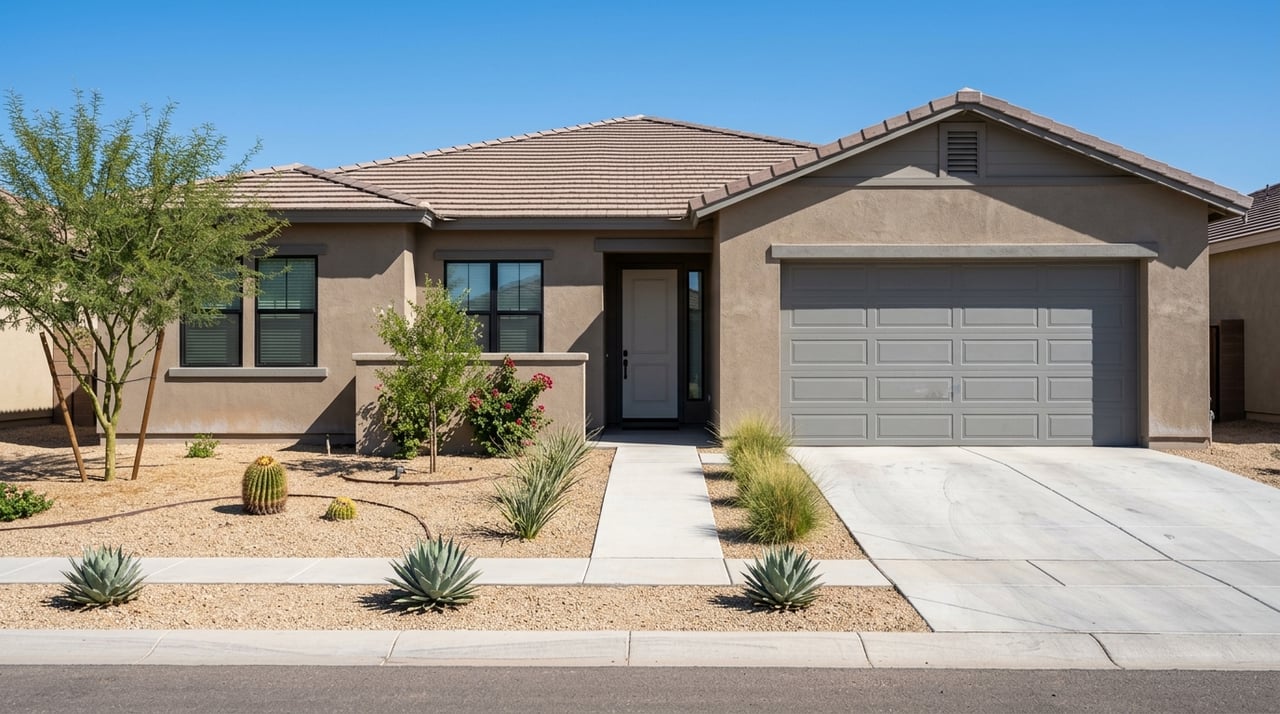
Glendale vs Peoria Housing: Which West Valley Fits You?
May 14, 2026
May 14, 2026
Wondering whether Glendale or Peoria is the better fit for your next move? You are not alone. Many West Valley buyers compare these two cities because both offer strong housing options, but the feel, pricing, and housing mix can be very different. If you want a clearer side-by-side look at cost, home styles, amenities, and what daily life may feel like, this guide will help you narrow your search. Let’s dive in.
Glendale and Peoria are both major West Valley markets, but they often attract different types of buyers. Citywide data suggests Glendale is generally more affordable, with older and more varied housing stock, while Peoria tends to be pricier and more tied to newer master-planned growth.
That does not mean one city is better than the other. It means your best choice depends on what matters most to you, such as budget, home style, neighborhood structure, and the kind of amenities you want nearby.
If price is a big part of your decision, Glendale currently has the lower citywide entry point. In March 2026, Glendale’s median sale price was $450,000, compared with $540,000 in Peoria. That puts Peoria about 20% higher on a citywide basis.
Price per square foot also shows a gap, though it is smaller. Glendale came in at $239 per square foot, while Peoria reached $258 per square foot. In simple terms, you are often paying more in Peoria for both the overall home and the space inside it.
The pace of the market is fairly similar. Glendale homes were on the market for about 57 days, while Peoria homes averaged about 51 days. Both cities were described as somewhat competitive, with about 2 offers on average.
Census housing value data supports the same general pattern. Peoria’s median owner-occupied housing value is $463,600, compared with $387,500 in Glendale. That gap reinforces the idea that Peoria usually commands a higher price point.
Glendale is a mature city with deep roots dating back to the late 1800s. Its planning documents describe it as a full-service community with nearly 200 registered neighborhoods and HOAs, along with a long-running historic preservation program.
For you as a buyer, that often means more variety in what you will see from one area to the next. Depending on the neighborhood, you may find older established homes, mid-century properties, infill opportunities, larger lots, historic character, or newer planned developments.
Glendale is not only about older homes. The city also includes large master-planned residential communities and large-lot single-family properties, and newer communities like StoneHaven add another layer to the housing mix.
Peoria’s planning documents put a stronger focus on master-planned communities, mixed housing types, open space, and clustered development areas. The city’s long-term land use planning includes a Master Planned Area layer and multiple specific area plans in North Peoria.
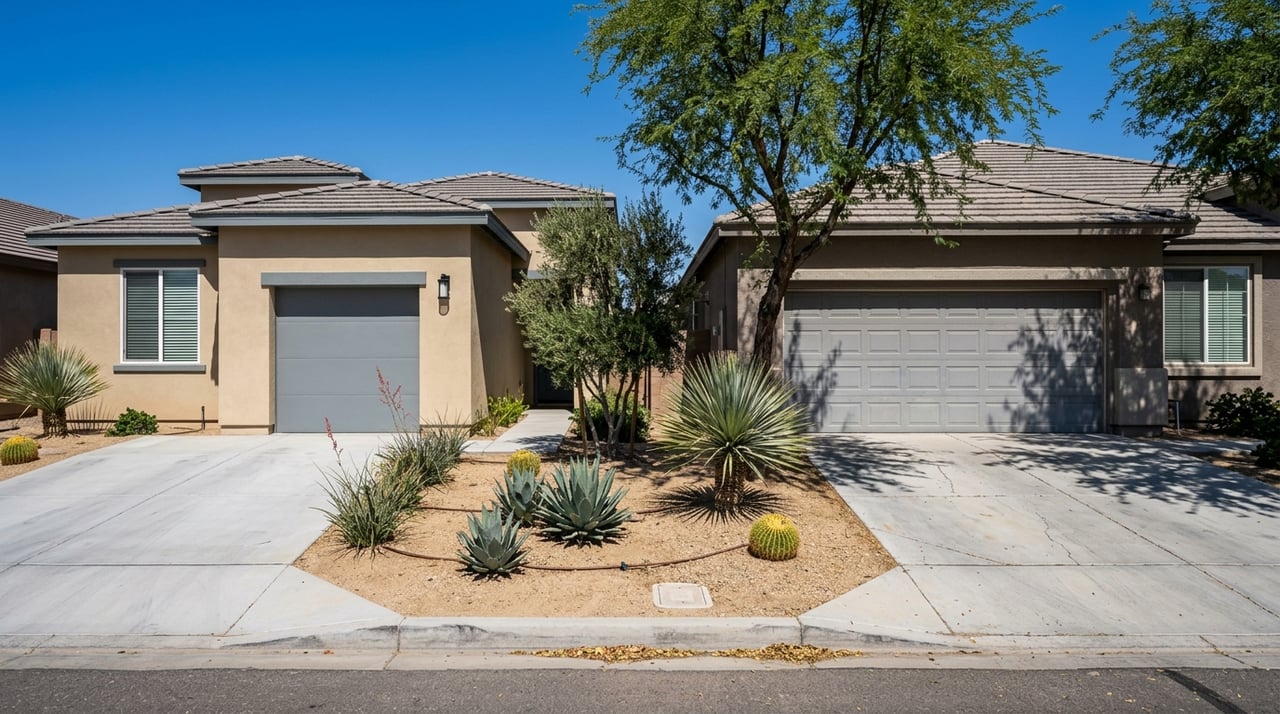
In practical terms, that often translates to newer subdivisions, more consistent neighborhood layouts, and a greater chance of finding HOA-managed communities in the north and west parts of the city. If you like a more uniform suburban layout and newer construction patterns, Peoria may feel more aligned with your goals.
A neighborhood-level example helps show the range. Tierra del Rio in Peoria recently posted a median sale price around $700,000, while Glendale’s Sahuaro neighborhood was around $420,000. That is a reminder that your experience can change a lot depending on the specific area you target.
Another citywide difference is the ownership mix. Glendale’s owner-occupied housing unit rate is 57.2%, while Peoria’s is 76.0%. That suggests Glendale has a larger renter presence overall.
Median gross rent also differs. Glendale’s median gross rent is $1,528, compared with $1,843 in Peoria. For buyers, this can shape how a neighborhood feels, especially if you are comparing long-established areas with different mixes of owner-occupied and rental housing.
This does not tell the whole story at the neighborhood level, but it does help explain why Glendale may feel more mixed citywide while Peoria may feel more owner-occupied in many areas.
Glendale officially recognizes nearly 200 registered neighborhoods and HOAs. The city also offers an HOA Academy and community engagement programs, which shows that neighborhood-level organization plays an active role across the city.
For you, that usually means HOA expectations can vary quite a bit from one Glendale neighborhood to another. Some areas may have more established or lighter-touch rules, while others may be more structured depending on the community.
Peoria maintains a dedicated GIS layer for HOAs, HOA communities, and neighborhoods without HOAs. While not every neighborhood has an HOA, HOA status is clearly a recognized part of the local housing landscape.
Combined with Peoria’s master-planned growth pattern, newer subdivisions are more likely to include standardized CC&Rs, architectural review, and shared amenity packages. If you want a neighborhood with a more predictable rules-and-amenities setup, Peoria may offer more of those options.
Glendale’s city resources highlight a strong mix of entertainment, sports, healthcare, education, defense, and aerospace assets. Major local destinations include State Farm Stadium, Westgate Entertainment District, Desert Diamond Arena, Camelback Ranch, Topgolf, Thunderbird Conservation Park, and historic Sahuaro Ranch Park.
The city also highlights freeway access and strong visibility around major entertainment and retail areas. If you like being closer to game days, concerts, shopping, dining, and larger event venues, Glendale may check more boxes.
Peoria’s planning documents emphasize Lake Pleasant Parkway as a key access route between business and commercial areas and Lake Pleasant. The Loop 303 corridor is also described as a prime area for high-quality employment opportunities, with planning support for hospitals, employers, higher education, office campuses, and business parks.
On the recreation side, city planning highlights Lake Pleasant Regional Park, trail connections, new park and recreation opportunities, and the Peoria Sports Complex in the P83 Entertainment District. If you want a more suburban setting with a strong outdoor and recreation focus, Peoria may stand out.
The biggest takeaway is simple: neither Glendale nor Peoria is one thing. Glendale includes historic districts, established subdivisions, and newer master-planned pockets. Peoria includes both older areas and major north and west growth corridors.
That is why citywide averages are only your starting point. Once you narrow your price range, commute needs, and preferred home style, the neighborhood-level comparison usually matters more than the city name on paper.
If you are trying to decide between the two, a guided side-by-side search can save you time and help you avoid comparing the wrong areas. The right fit usually comes down to matching your budget and lifestyle with the right part of each city.
If you want help comparing Glendale and Peoria in a way that fits your goals, budget, and timeline, Erica Cherry can help you evaluate neighborhoods, weigh home styles, and move forward with confidence.
Stay up to date on the latest real estate trends.
Looking to buy, sell, or just have a question? I'm always available to help and would love to work with you. Contact me today to start your home searching journey!